

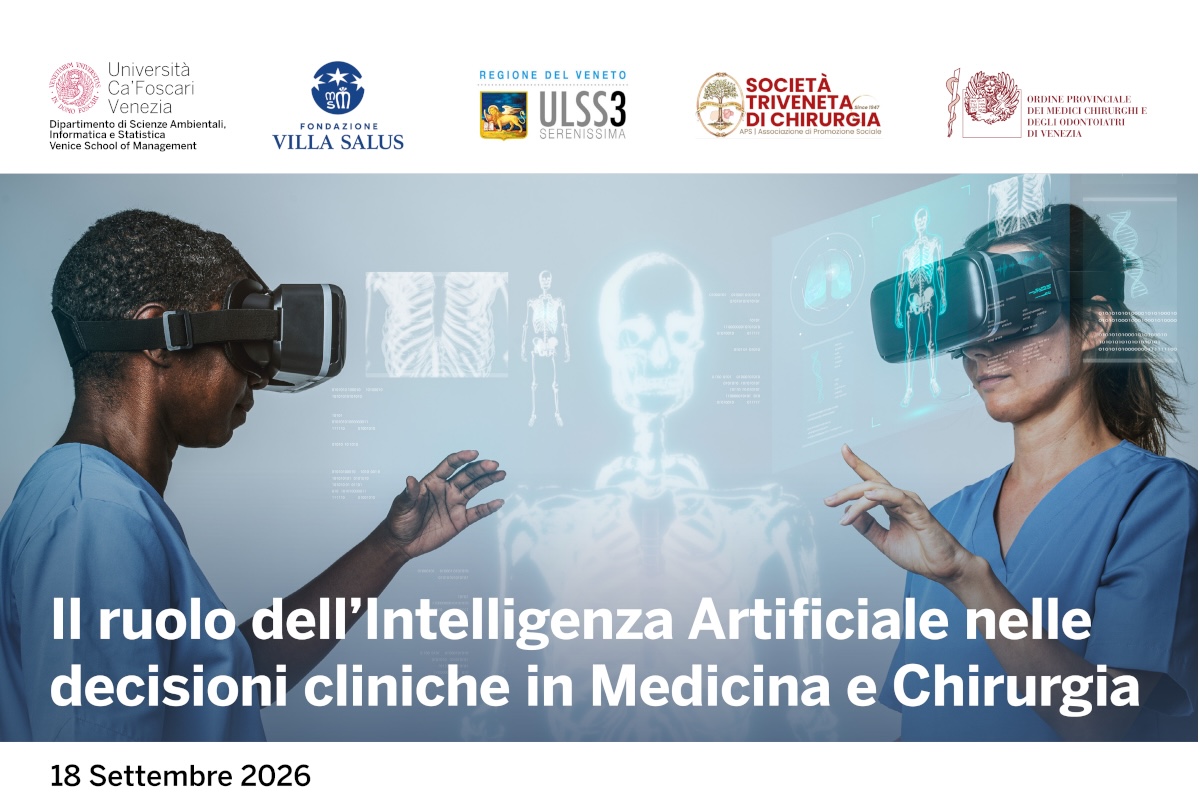
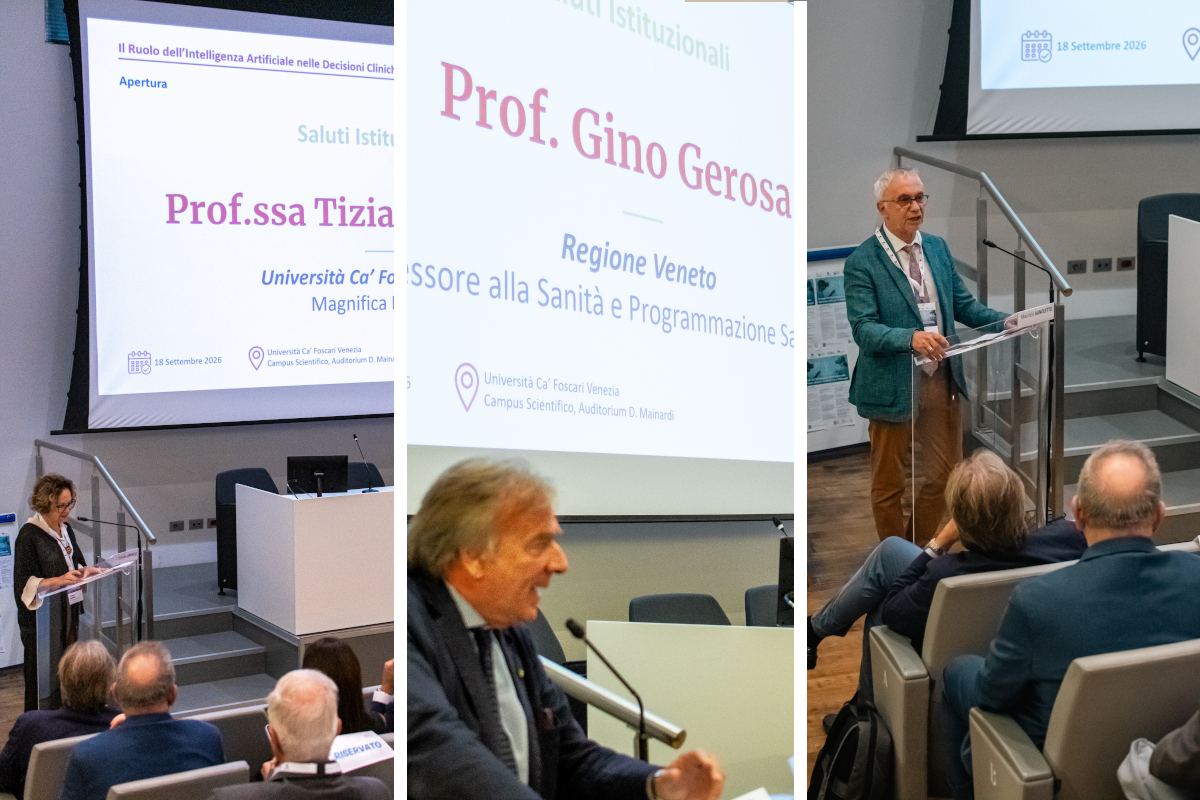
“Rather than focusing on the best-known and most accessible aspectof artificial intelligence—namely, that based on large language models (LLMs), with which one can converse as one would with a person using natural language —explains the computer science professor — the event focused on machine learning and neural networks (machine learning models), which are more complex processes where AI’s automated processing capabilities can also be useful in medicine— from diagnostics to surgery—as well as providing support in the operating room.”
A technology that, in addition to opening up great opportunities, also carries significant implications. Starting with the training of physicians, who—faced with an ever-increasing influx of innovation— must not lose their autonomy:“The risk is a loss of skill,” Nobile explains. “We must not forget the technical aspects; in the operating room, one must be able to make clinical decisions even without assistance.” These implications also extend to legal and ethical aspects, given the potential for bias in the data being managed—posing a threat not only to patient privacy but also to entire databases built on inaccurate foundations ,which can only lead to flawed—and therefore presumably incorrect—decisions.
In short, this impact must be carefully calibrated, starting with the introduction of these systems among doctors and patients. “AI is making its way into every aspect of life —the professor sums up— In the healthcare field—from diagnostics to research—it improves speed and observational capacity, but comes with a great responsibility for accuracy. It can also be useful in prognostics for predicting the outcome of a procedure, but the presence of a human operator with a critical mind remains essential. ". The threat, in fact, remains that of internal biases, which—based on inappropriate data—can lead to wrong decisions. "One example is women, for whom there are fewer dedicated studies, so data from men is used instead, which may not be very representative," adds the expert.
Even technology itself is not immune to these risks: “Tools for robotics, diagnostics, and surgical procedures designed for Asian individuals—who have a lower body mass than we do—may prove less precise than they should be when used in Europe,” the professor points out. There is also a risk of bias: if the developers of a system train it based on theories not validated by the scientific community, there is a risk of significant distortions:“But there are safeguards,” Nobile reassures us, “ a device that has received the CE mark has undergone rigorous testing.” Of course, the debate over the collection and use of sensitive data remains open:“With the so-called ‘health data space,’ Europe would like to provide a medical history accessible to various parties,” the professor wonders, “but who would monitor the secondary use of data that could also be available to private companies? There would need to be an intermediate verification step for patients.”
Paradoxically, the first thing to focus on in such a technology-driven environment is interpersonal communication.“Patients need to know what AI provides to healthcare professionals, who are responsible for explaining what the machines help them detect and do, but cannot delegate their relationship with patients,” Nobile advises. “The medical profession of the future will evolve; it cannot afford not to be aware of how these tools work, the risk of bias, and the need to develop and maintain a critical mindset.”
At a time when the surgical profession is facing a “vocation crisis,” with many students choosing other specialties that are less stressful and more lucrative.“The stress and responsibility are immense,” the professor concludes, “ But AI could contribute in this regard, even if we cannot imagine leaving the task of saving lives entirely to a machine. Humans will remain irreplaceable, but artificial intelligence still has a long way to go in unexplored areas, such asnursing, where demographic trends and staffing shortages could give rise to scenarios we cannot even imagine today. ».