

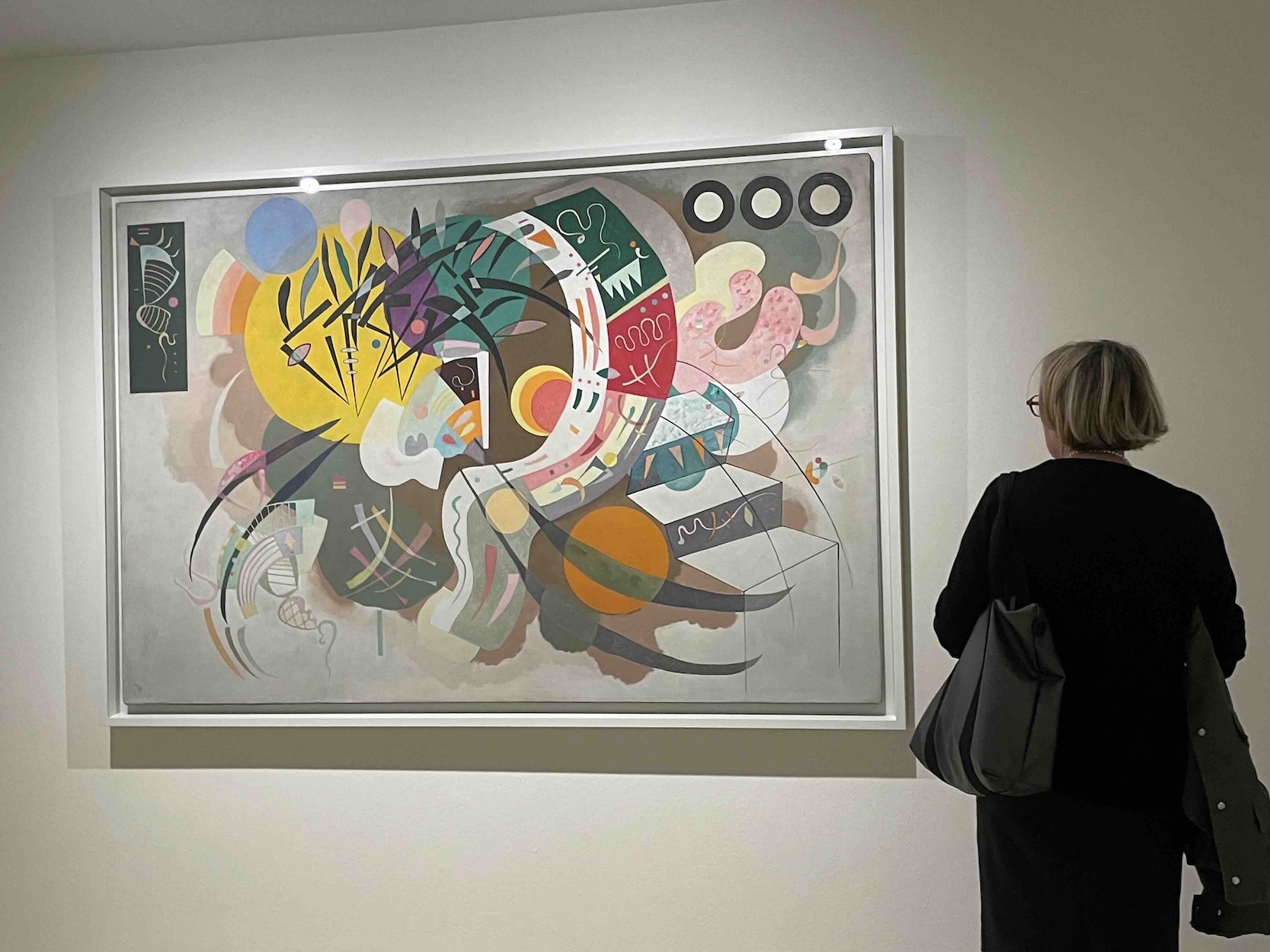
This period was also decisive in shaping Guggenheim’s identity as a collector and patron of the arts, so much so that it was during the exhibition dedicated to Kandinsky he purchased two paintings, including “Dominant Curve,” which he later sold to his uncle Salomon R. Guggenheim; the work is currently on loan from his museum in New York.
The exhibition features about a hundred works on display in those pioneering exhibitions, along with similar works from the same period drawn from major international institutions and private collections, interspersed with works by artists whom the Guggenheim would later collect. The exhibition features paintings, sculptures, works on paper, photographs, puppets, and archival materials, showcasing the extraordinary variety of artistic languages presented in the gallery and documenting a period of intense experimentation
artistic and cultural ferment in which Guggenheim was determined to establish a museum of modern art in London—a vision she ultimately realized in Venice, in the palace where she chose to live, which today houses her collection.
In a surprisingly short period of time, from January 1938 to June 1939, the “Guggenheim Jeune” became one of the leading centers for the artistic avant-garde of the time in promoting local and international artists, distinguishing itself through a bold and experimental program.
In just eighteen months, the Guggenheim organized more than twenty exhibitions and set numerous curatorial records and groundbreaking projects linked to the trends of abstraction and surrealism. Among these, in addition to the first solo exhibition in the United Kingdom by Wassily Kandinsky, the inaugural exhibition was dedicated to Jean Cocteau, followed by the first exhibition in the United Kingdom entirely dedicated to collage featuring works on paper by Picasso and Braque, the 1938 contemporary sculpture exhibition which caused a major scandal with works by Jean Arp that explored abstraction and new ways of working with materials, and which was instrumental in the spread of contemporary sculpture in England, and an exhibition of artwork created by children: “This collection also included the first known painting of a very young Lucian Freud - the curator pointed out Gražina Subelytė, explaining that this marked the renowned British artist’s debut exhibition. — Furthermore, Many of the works from that exhibition have gone missing, and we're conducting an investigation.”
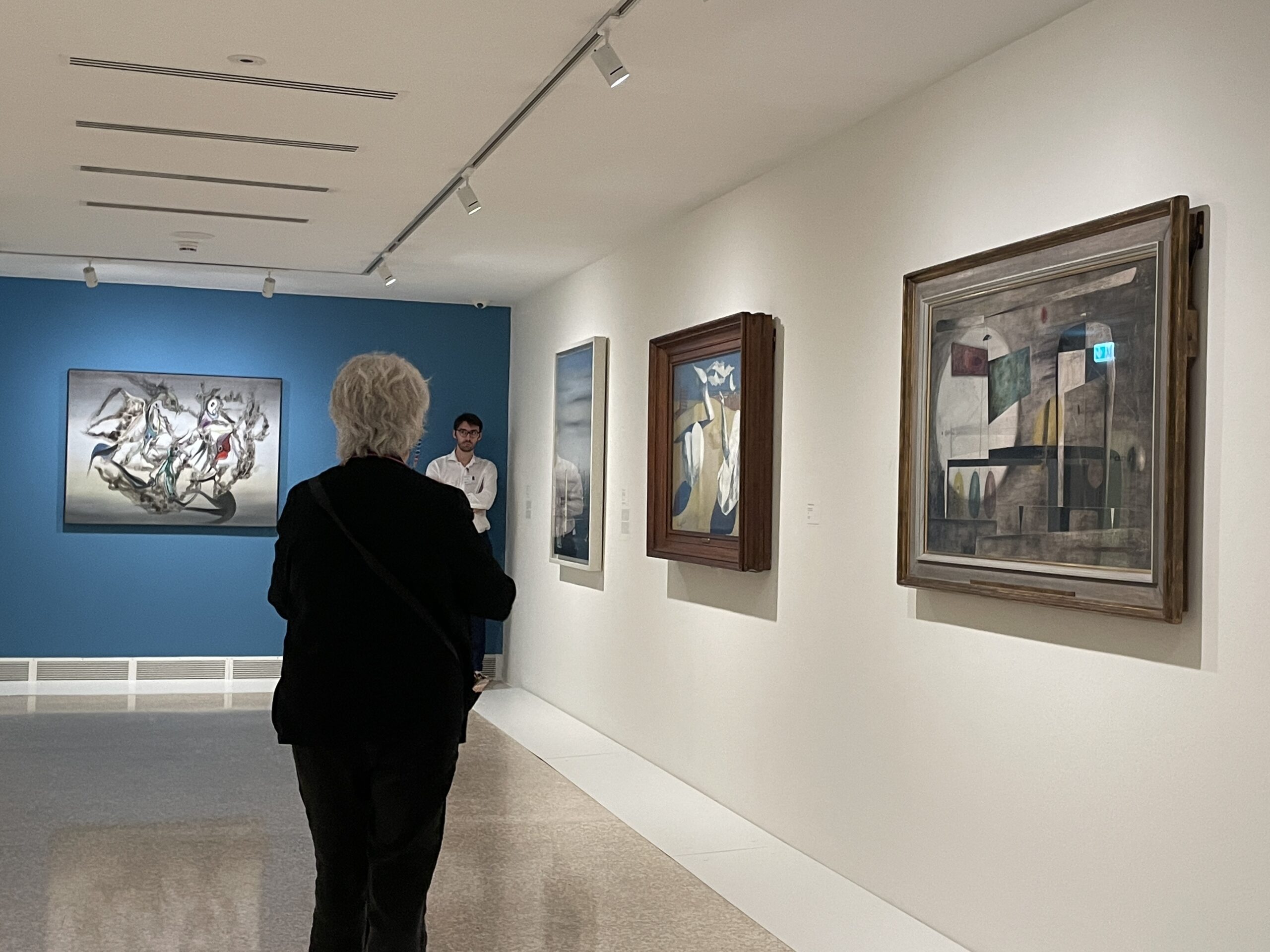
The exhibition begins with key works of abstract art and Surrealism on display
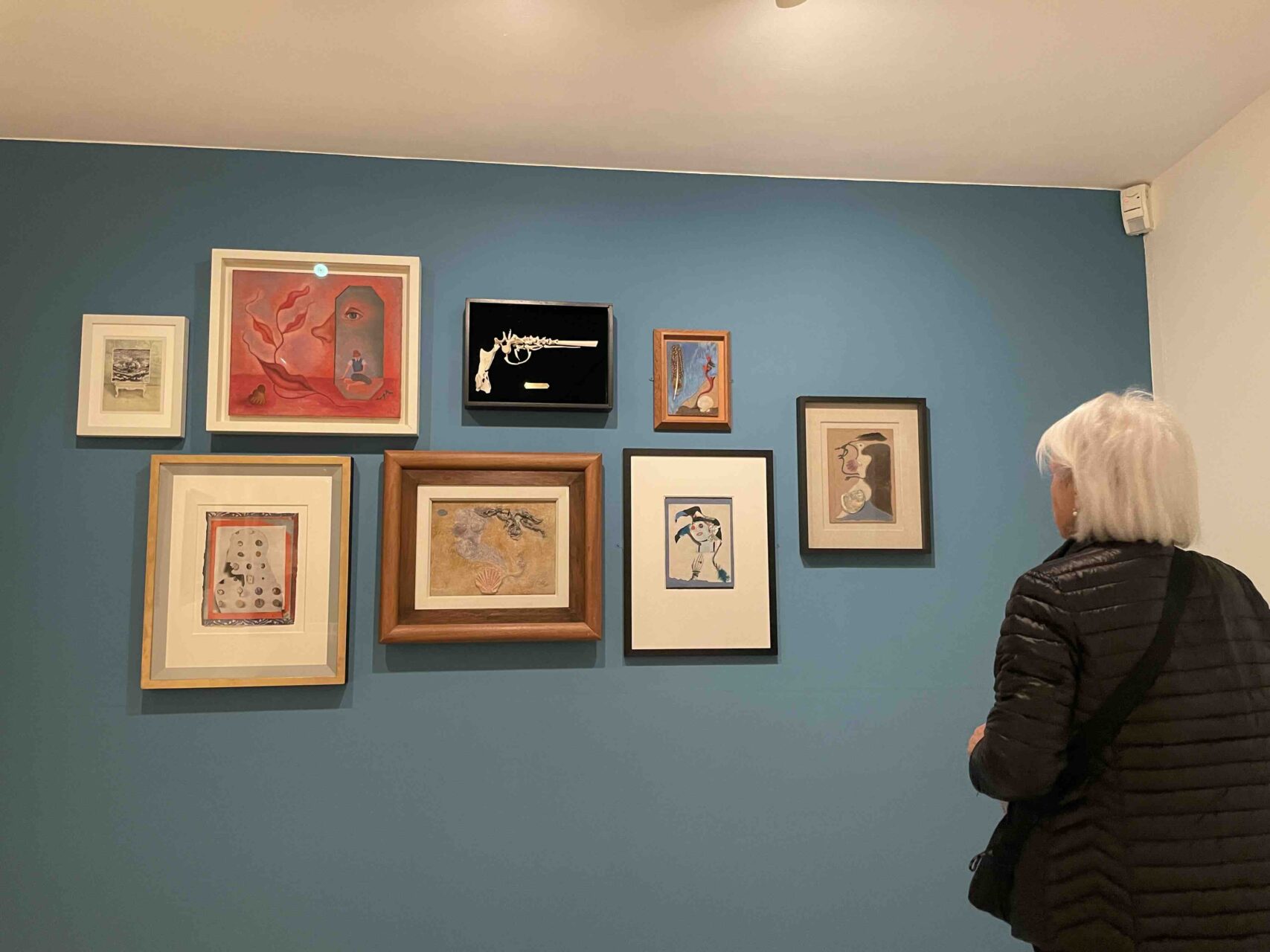
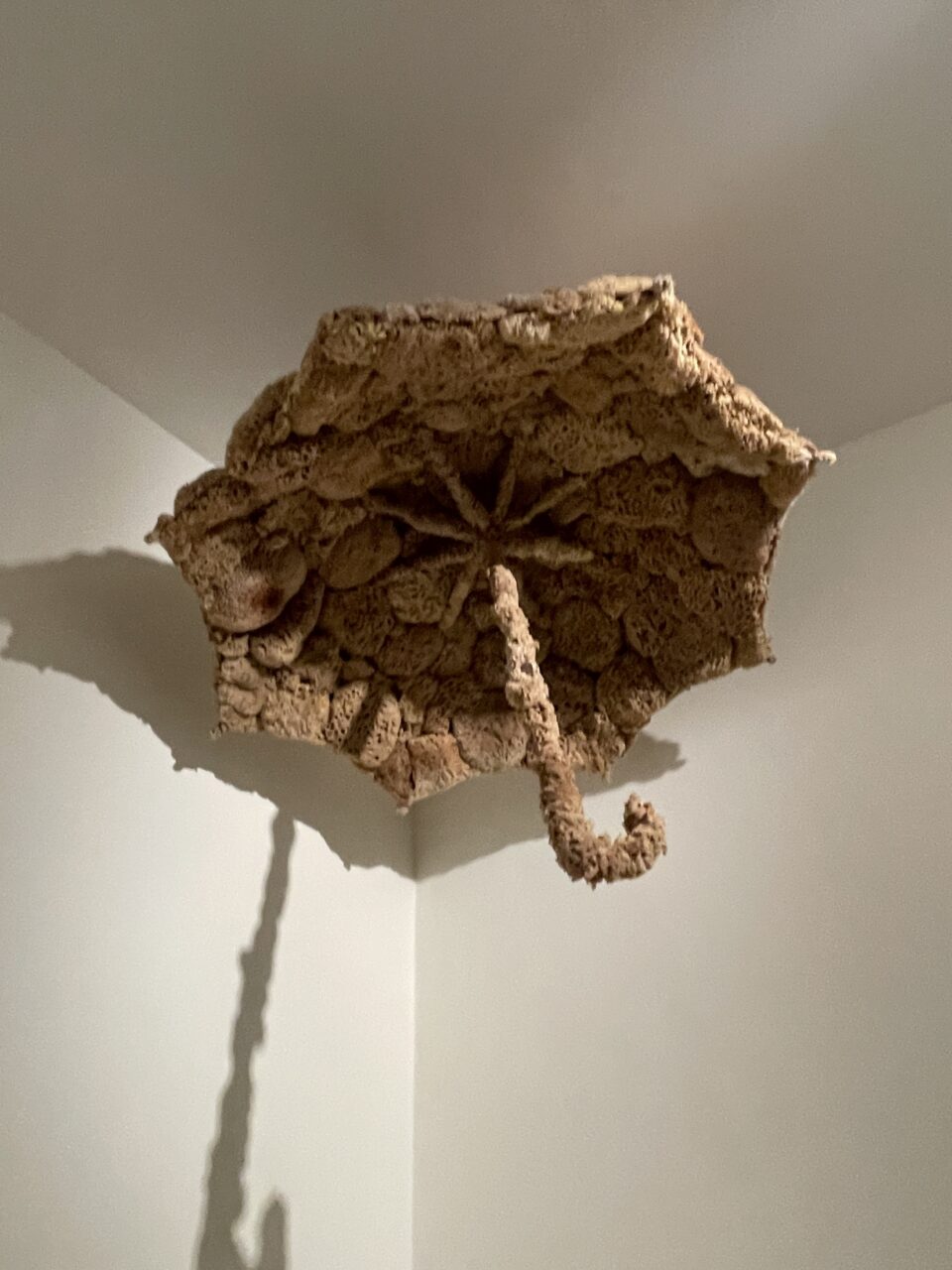
during the brief but intense period of activity of “Guggenheim Jeune,” which reflected the main artistic trends underlying the gallery’s program, including the small sculpture “Head and Shell” by Jean (Hans) Arp and the large suspended assemblage featuring an umbrella and natural sponges “Articulated Cloud” by Wolfgang Paalen. The following rooms are dedicated to the individual exhibitions held in the space, such as the first Surrealist exhibition dedicated to the Danish artist Rita Kernn-Larsen, who exhibited more than 30 paintings, such as the self-portrait “where a mouth transforms into the leaves of a tree,” he explains Subelytė, as well as the one dedicated to the Russian artist Marie Vassilieff, a leading figure in a hybrid and transdisciplinary practice that blurs the boundaries between art, craftsmanship, and design, and the creator of the genre of “artistic dolls” handmade, such as “The Devil” and “The Policeman” present on display. Also standing out are the small earrings made for Peggy by Yves Tanguy. One room is also dedicated to color photographic portraits of artists and intellectuals from Gisèle Freund, including the 1977 photograph depicting Peggy Guggenheim with Herbert Read. "We are bringing lesser-known artists from that period back into the spotlight, particularly women," said the curator Simon Grant.
There is also a tribute to the historic exhibition “Abstract and Concrete Art”, featuring works by artists such as Mondrian, Taeuber-Arp, and Van Doesburg.
On the occasion of the exhibition, Mondrian’s masterpiece is on display “CComposition No. 1 with Gray and Red, 1938 / Composition with Red, 1939 ” which is once again visible to the public after more than five years of restoration and interdisciplinary research launchedlaunched in 2021 by the museum’s conservation department.
Painted between 1938 and 1940, on the eve of World War II, the painting represents one of the high points of Mondrian’s neoplastic exploration: a sophisticated composition of area, light and space.
The conservation work—which was necessary following a restoration carried out in New York in 1968 that had altered the appearance of the artwork—provided an opportunity to deepen our understanding of the work’s spatial and material conception and to restore its original perceptual qualities.
The restoration made it possible to reestablish the balance between matte and reflective surfaces, restoring clarity to the complex spatial composition conceived by the artist. Analyses have shown that the artist created the black lines by multiple overlapping layers of paint and varnish, repeatedly revisiting his compositions over time to refine proportions, surfaces, and spatial relationships, while the white and colored areas retain visible brushstrokes and matte textures. The final rooms bring together the works of the Surrealist artists and those featured in the collage exhibition, such as the one by Hans Hartung, which consists of metal, wire mesh, rope, nails, screws, and glue on paper mounted on a wooden panel, and the work that contains a collection of bird and mammal bones arranged to form the image of a gun made of Wolfgang Paalen: “For some,” he concluded, Grant - “Some considered them splendid works; others found them unacceptable. The exhibition left an important legacy.”