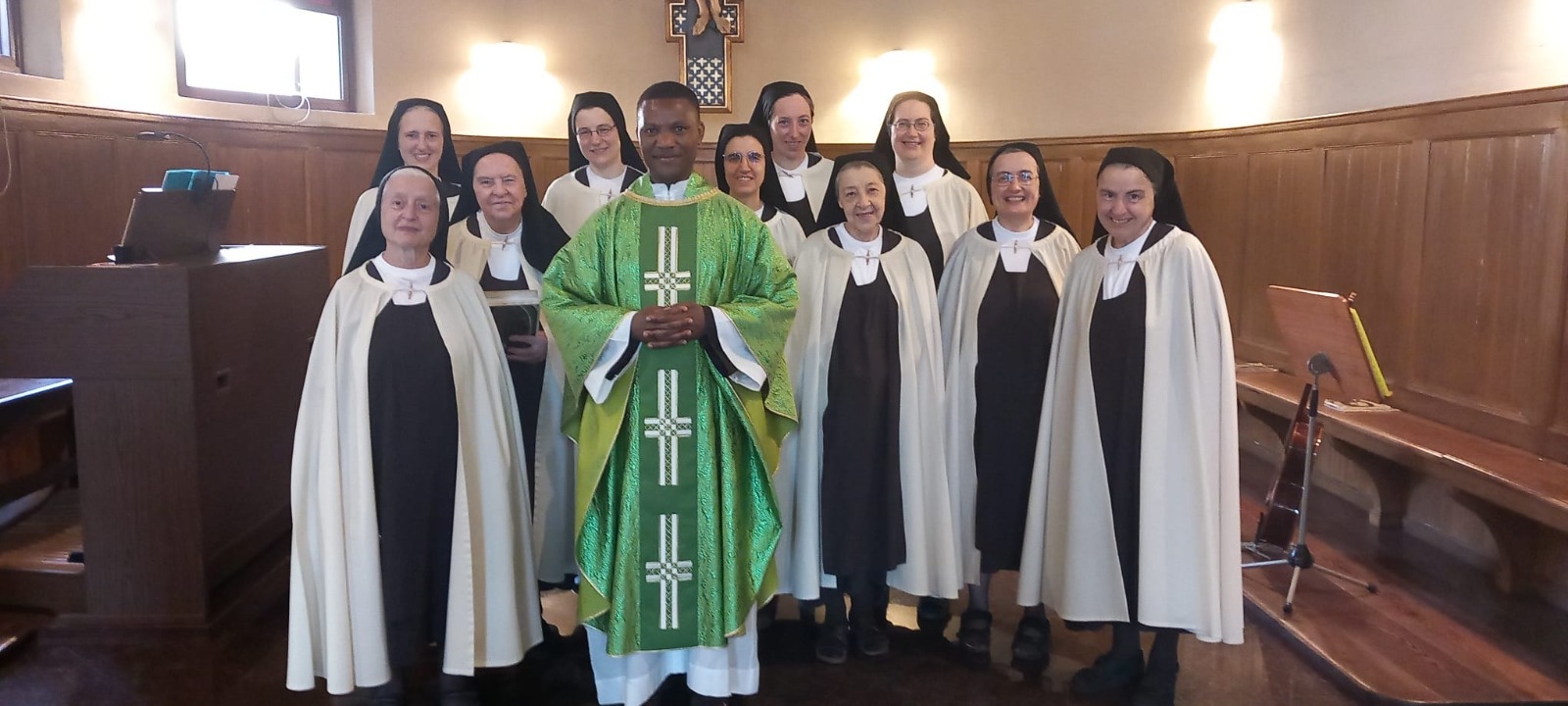
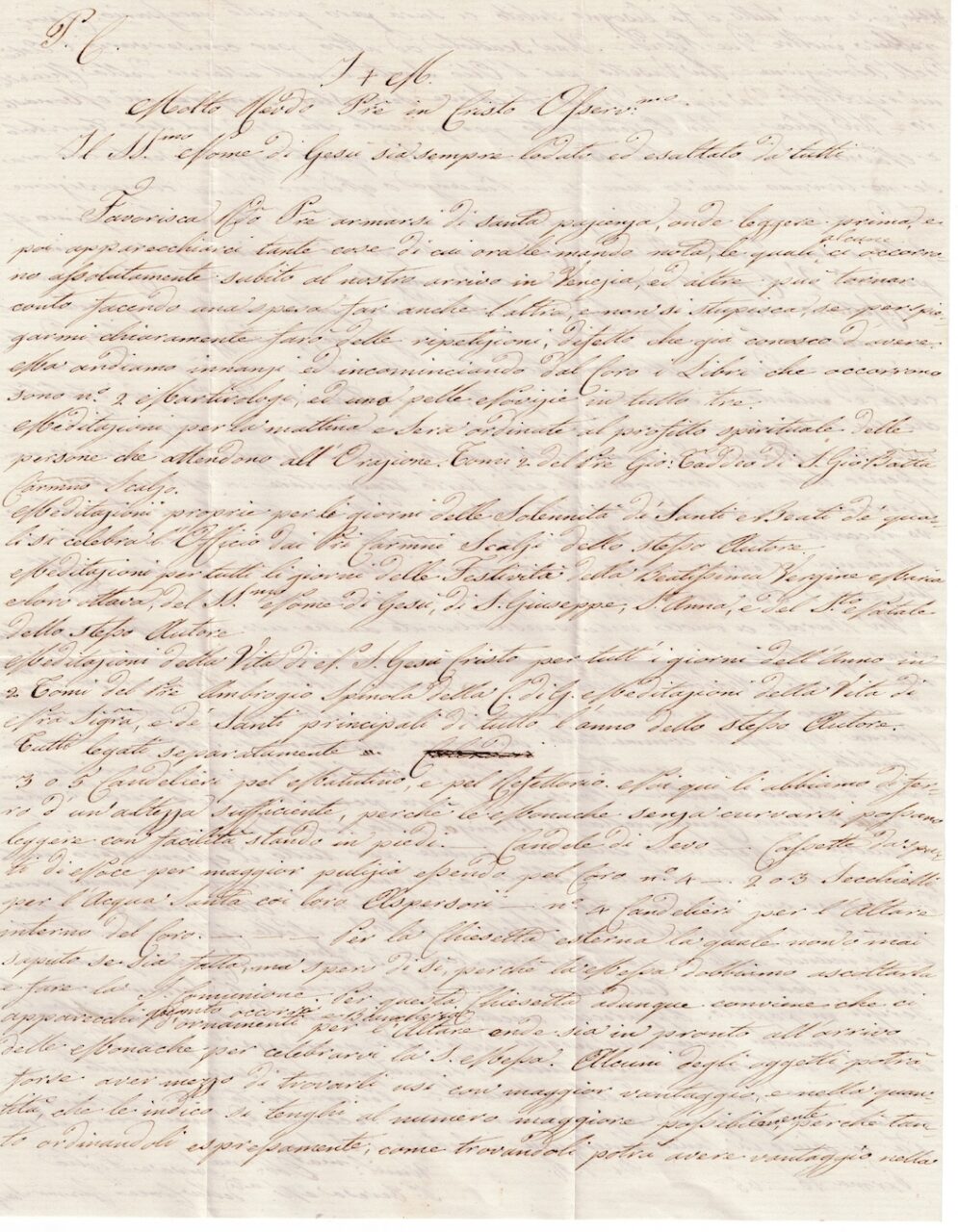
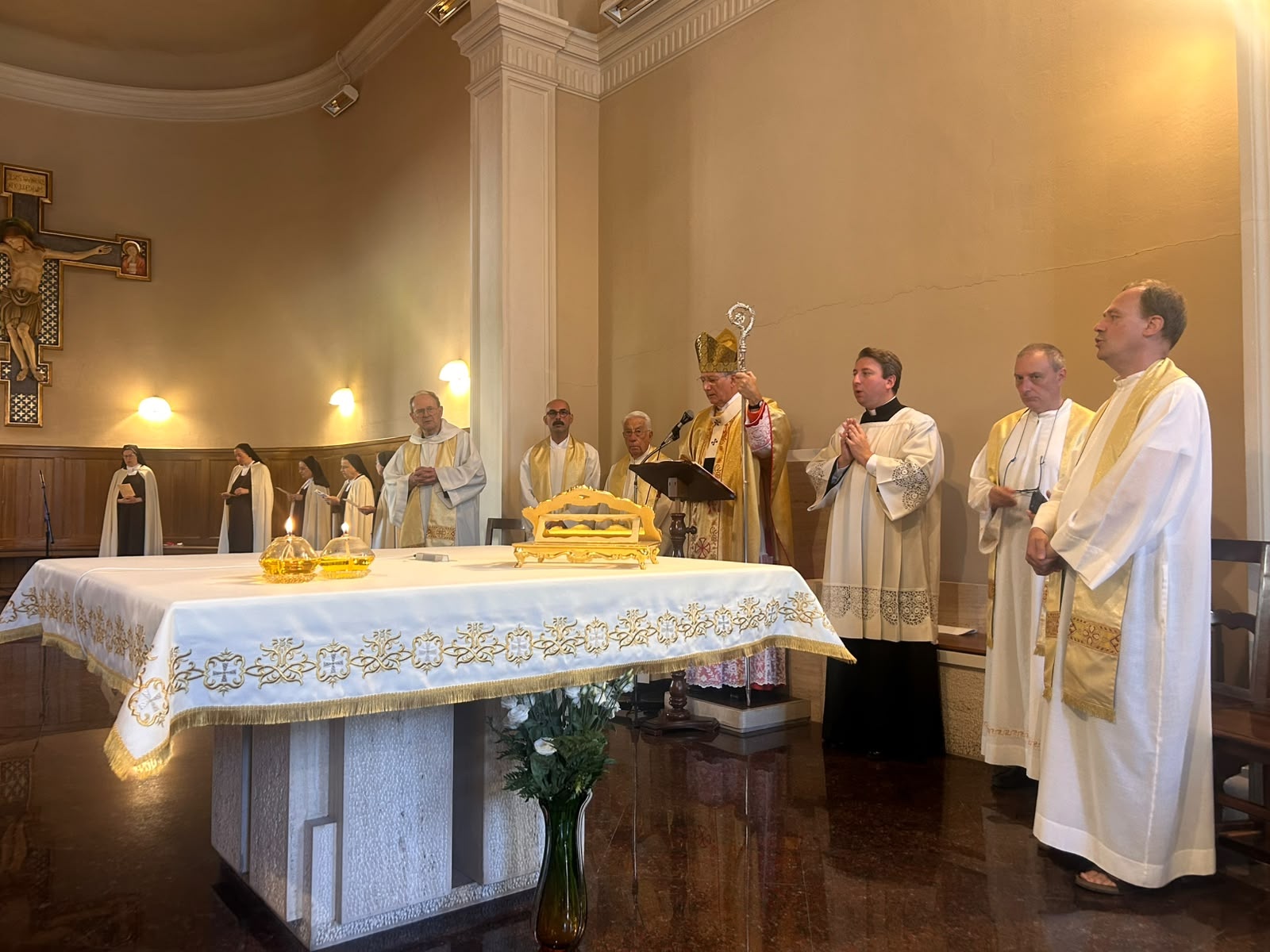
A century and a half of history lived in the light of prayer, which embraces everyone without distinction. Although their way of life is based on cloistered living, the Discalced Carmelites are deeply rooted in the city, whose strengths and weaknesses they know well. These are the very issues that need to be addressed, so that the true fabric of the city—made up of Venetians who choose every day to keep believing in Venice— does not fade away. “We’re very sad to see how the city is increasingly becoming a tourist destination,” say Sister Lucia Zamuner and Sister Maria Chiara Lanfranchi. “It’s gradually losing its population, the average age of residents is rising, and many shops have disappeared. We’d like it to be a bit more livable.” These sincere words show that the nuns—who last Sunday celebrated the 150th anniversary of the founding of their monastery in the Lagoon, just a few steps from Campo Sant’Alvise—are by no means “out of touch” with the events and issues affecting the city and its inhabitants: from the Aqua Granda to COVID-19, right up to the social transformations of our time. “Even though we lead a secluded lifestyle, we are part of the world. We feel and experience what is happening.” Now comprising 12 nuns between the ages of 43 and 92, the community of the Venetian Discalced Carmelites lives with an awareness of just how delicate the current historical moment is, without, however, being frightened by it. “It’s painful,” reflects Sister Lucia, referring to the conflicts around the world and recalling the monthly prayer for peace, “to see what’s happening, but in the end, God is the Lord of history. We know that even though we’re going through difficult times, He continues to ‘work.’ Faith tells us to look beyond, to have faith, and to do our part.”
Sister Maria Chiara, Sister Lucia, what message would you like to share with the city on this important anniversary?
MC: Venice is made up of more than 100 small islands connected by 400 bridges, which are essential for living in harmony. My hope? That it may be a city of peace, of healthy relationships, with a heart open to dialogue with everyone. Let’s say “no” to unchecked tourism, which is driven solely by economic interests and risks turning from a resource into something that can crush us. Let’s place our hope in the new mayor and the progress of his work. We also need to focus on people: the elderly who need care, college students looking for housing, children who need a park to play in, families seeking an affordable apartment, and people with disabilities who can move about without architectural barriers.
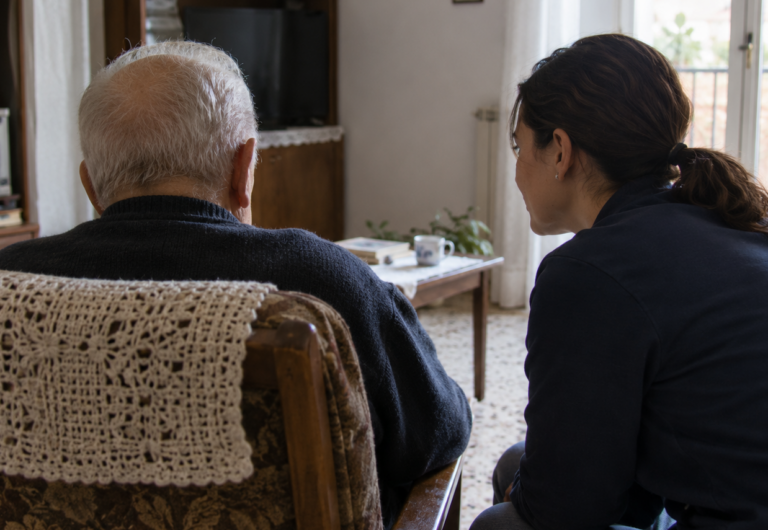
L: Venice has a slow pace of life, due to the fact that people get around by boat or on foot. And this fosters relationships: everyone knows each other to some extent, a characteristic that must not be lost. Our call is to make the city more livable for those who want to live here. Many older people we’ve met—whose children have moved to the mainland—had their apartments converted into B&Bs after they passed away. Our hope is that there will be job opportunities that aren’t solely tied to tourism.
How does your presence fit into a place like Venice?
MC: Our home is close to the Emporio della Solidarietà and Anffas, a residential community for people with disabilities—two places where human vulnerability is most evident. We’re proud of these people in our neighborhood: the Emporio volunteers are our friends, and we keep their keys safe. When they’re away… we even act as their “mail drop” (laughs, ed.)! This is a quiet, very Venetian neighborhood where many families still live.
L: Ours is, first and foremost, a presence of prayer, one that also seeks to bear witness to another dimension amid the frenzy that surrounds us. We are connected to the city and its events, and being here is our calling. For us, time is marked by prayer and the rhythms of our work. It is an intense life, and what gives it meaning is for whom we live and how: a different way of life, intended to benefit everyone.
What significance does a vocation like yours hold today?
L: In a world that seems to have lost its bearings, in a sense we try to point the way. If the Lord isn’t there to show us the way and help us walk toward what is good, we lose our bearings.
The Impact of AI and New Technologies: A Threat or an Asset?
L and MC: It depends on how they’re used. We don’t have social media accounts because, at least for now, we don’t see how they’d be useful in our lives. But we do use the internet and take online courses in theology and spirituality. Sometimes we also need to do research using AI, and for certain purchases (reams of paper, books, replacement parts, products for making our wine, candle wax…) we shop online—either on Amazon or through other sellers. After all, many stores in Venice have closed, and buying what we need online means we don’t have to go out. As for groceries, however, we shop at the nearby supermarket and then have them delivered. AI? We need education on how to use it so that it doesn’t replace humans. It has enormous potential, but it’s still a machine, and we need to know how to spot fake news. As for social media, it will never be able to replace real relationships.
What was the most precious legacy left by the first sisters who arrived in Venice?
MC: Great courage and great faith. They were women of God who did everything for His glory. When they began to form the community here, they asked the Lord for a grace: that there might always be brotherly love. As St. Teresa of Avila always said, “One must take risks in life,” and they lived a life in which God was the central figure.
L: Our community has done a great job of adapting to the Second Vatican Council. The ways in which we observe the signs of cloistered life have changed; we can go out to do our grocery shopping when necessary, and—something very important for our community—we have been ecumenically open for decades, most recently with the Lutheran and Waldensian Churches. They come here once a month for a time of prayer, and we provide them with a room for their meetings.
What advice would you give to young people who are trying to find their way?
L and MC: Don’t be afraid, because every life has meaning, and don’t settle for trying to fill a void. Don’t let yourself be swept along by the current: sometimes, the road less traveled is the one that leads you to true joy.